← Back to Homestay Prep Course / ← ホームステイ準備コースに戻る
The Drive Home
Chapter One of the Hobart homestay story · ホームステイ物語サンプル
What this story actually does · この物語について
日本語
フレーズを知っていても、必要な瞬間に口から出るかどうかは別の話です。準備が足りないまま渡航すると、最初の1週間を自分の部屋で過ごしてしまったり、夕食の席でただうなずくだけで終わってしまうこともあります。この物語は、そうならないために作られています。
フレーズは、同じ言葉に8〜10回出会うと使えるようになると言われています。だから、レッスンで練習したフレーズを次の章にもう一度登場させています。また、物語ならプレッシャーのない状態で英語に触れられます。緊張すると、頭ではわかっていても言葉が出にくくなるからです。渡航前に目的地のアクセントを耳に入れておくことで、到着初日の「聞き取れない」も大きく減らせます。
ホームステイ準備集中コースでは、渡航先の街を舞台にした物語が読めます。レッスンで練習したフレーズが次の章に登場するので、似た場面に出会ったとき「あの場面でキャラクターが言っていた言葉」として自然に出てきます。音声は渡航先のアクセントで、ゆっくりめのスピードで録音されています。下線つきの単語をタップすると、日本語の意味・文法・例文がすぐ確認できます。
English
Knowing the right phrases isn't the same as having them come out when you need them. Students who go overseas without preparation often spend the first week hiding in their room — sitting through every dinner nodding silently because they don't know what to say. This story closes that gap.
The design is deliberate. Research in second language acquisition shows that a word or phrase needs to appear in context eight to ten times before it's reliably acquired — which is why phrases from each lesson reappear in subsequent chapters. Stories also lower the anxiety that blocks language from coming out under pressure. And listening to an accent before you encounter it in person makes it measurably easier to understand on arrival.
Students in the Homestay Prep Intensive Course receive the story set in their actual destination — Hobart, Vancouver, Penrith, Eugene. So when a similar moment happens overseas, the words come back as what the character said at the dinner table, not a memorized line. Audio is narrated in the destination accent at about half normal speed — your ear adjusts before the flight. Tap any underlined word for the Japanese meaning, a grammar note, and an example sentence.
なぜ「Version A」と「Version B」の2つがあるの?
各ページには、同じ場面が「Version A — やさしい英語」と「Version B — ふつうの英語」の2つで並んでいます。理由を簡単にご説明します。
まず、同じ場面を「やさしい英語」で読みます。文を短く区切り、do not や I will のように、単語をはっきり分けて書いています。英語に慣れていない段階では、don't や I'll のように縮めた形は目が滑りやすく、not や will といった大事な小さい単語を読み飛ばしてしまいがちです。フルの形にすると文の仕組みが見え、「読めた」「わかった」と感じられます。最初の一歩はここからです。
そのあと、同じ場面を「ふつうの英語」で読みます。こちらはホストファミリーが実際に話すままの、自然な英語です。縮約形もリズムもそのまま。やさしい英語で場面を理解してから読むので、「さっきの場面だ」とわかった状態で本物の英語に触れられます。現地で本当に必要になるのは、この自然な英語を聞き取る力です。
つまり、Version A で「わかる」、Version B で「本物に備える」。同じ場面を、2つのレベルで読む仕組みです。
これは日本の検定教科書のつくり方とは少し違います。教科書はたいてい、ていねいに整えた英語を1種類だけ載せ、縮約形のような「生の英語」は避けがちです。そのため、教科書の英語はわかるのに、現地でネイティブに早口で話されると固まってしまう生徒さんを、これまで何人も見てきました。だからこの物語では、わかりやすいVersion Aと本物の英語Version Bを、あえて同じページに並べています。
下線のついた単語をタップすると、日本語の意味・文法・例文が出ます。Version A から読み始めて、慣れてきたら Version B も読んでみてください。
Why is there a "Version A" and a "Version B"?
Each page shows the same scene twice: Version A — やさしい英語 (easy English) and Version B — ふつうの英語 (natural English). Here's why.
First your child reads the scene in easy English. The sentences are short, and the small grammar words are spelled out in full — do not, I will, cannot — instead of don't, I'll, can't. For a beginner, those squished-together contractions are easy to skip right over, and the most important little words (not, will) get lost. Writing them in full makes the structure visible, so they actually decode the sentence and feel "I understood that." That first success is the point.
Then they read the same scene in natural English — the way the host family really talks, contractions and rhythm and all. Because they already understood the scene in the easy version, they meet the real thing already knowing what's happening. And it's this natural English they'll actually need to follow once they're in their host country.
So: Version A to understand, Version B to be ready for the real thing — the same scene, at two levels.
This isn't how Japanese school textbooks are usually built. A textbook tends to give one carefully-smoothed version of English and leave out the "messy" real-world parts — contractions, slang, natural rhythm. That's why students can understand textbook English perfectly and still freeze the first time a native speaker actually talks to them. So in this story we deliberately put both the easy scaffold (Version A) and the real, natural English (Version B) on the same page.
Tap any underlined word for its Japanese meaning, a grammar note, and an example. Start with Version A, then stretch to Version B when you're ready.
Page 1 / 15
Version A — やさしい英語
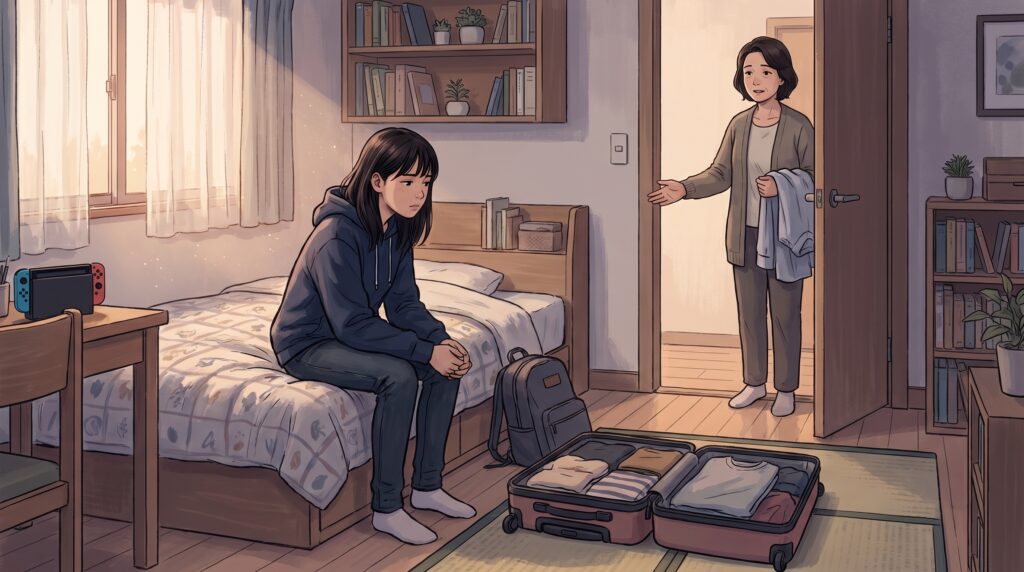
I am Hina. I am from Japan. I am 14. Today I fly to Australia. I do not want to go.
Version B — ふつうの英語
I didn't want to come to Australia.
I want to say that first, because it's true. For three weeks before the trip, I told my mother I didn't want to go. She didn't listen. "It is only nine days, Hina," she said. "You'll be fine."
Nine days. Nine days in a country I'd never seen, with a family I'd never met, speaking a language I wasn't good at.
Page 2 / 15
Version A — やさしい英語
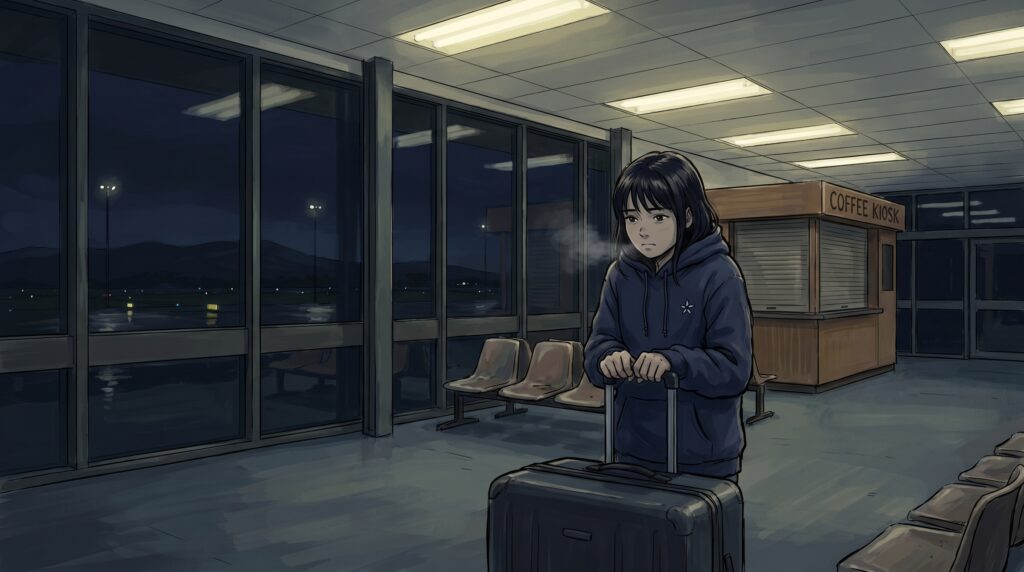
The plane lands at night. It is cold. The wind comes through my coat. I am tired. I am scared.
Version B — ふつうの英語
The plane landed in Hobart at night. It was winter in Australia — cold, dark, and the wind went straight through my coat. I was tired. I was scared. I wanted to go home, and I'd only just arrived.
Page 3 / 15
Version A — やさしい英語
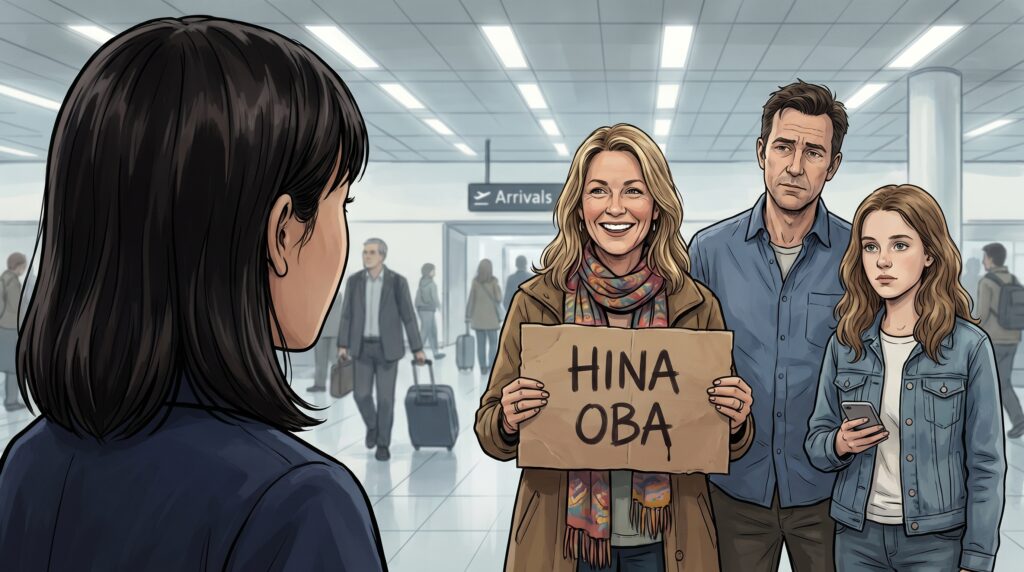
I see a woman. She holds a sign with my name.
"Hina?" she says. "Hi! I'm Megan. Welcome to Tasmania!"
"Hi, I'm Hina. Nice to meet you." I say.
A man and a girl stand next to her. They are Pete and Lily.
Version B — ふつうの英語
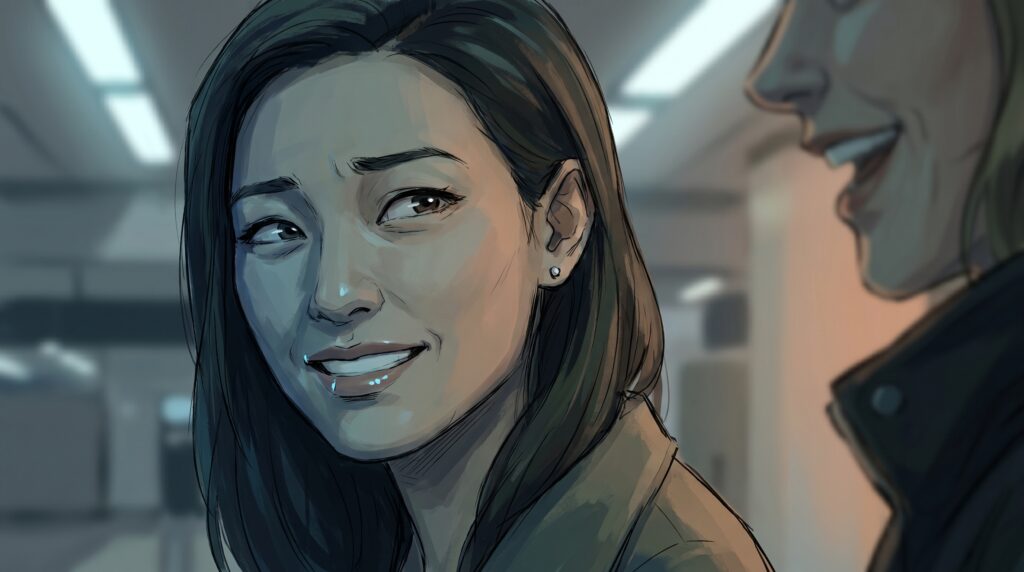
Then I saw them.
A woman was holding a small sign with my name on it: HINA OBA. She was smiling. Next to her stood a man and a girl about my age.
"Hina?" the woman said. "Hi! I'm Megan. Welcome to Tasmania!"
I had practised this part. I had practised it many times in the mirror at home.
"Hi, I'm Hina," I said. "Nice to meet you."
"This is Pete, my husband," Megan said. "And this is our daughter, Lily."
"Hi," Lily said.
"Hi," I said.
That was all I could say. My English ran out, like water from a cup.
Page 4 / 15
Version A — やさしい英語
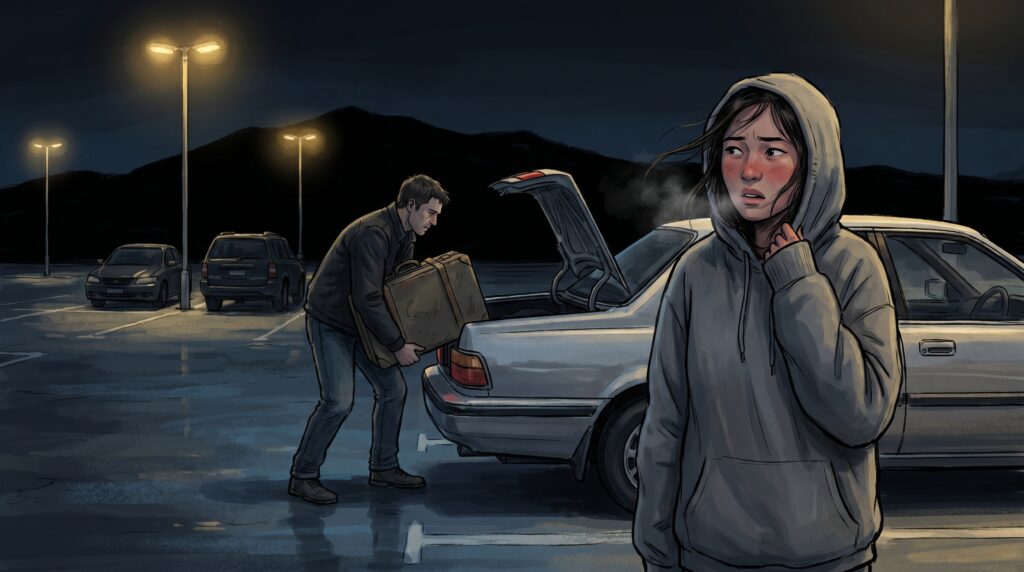
We walk to the car.
Version B — ふつうの英語
We walked to the car. It was cold and the car park was almost empty. Pete put my big suitcase in the back. "You must be knackered," he said.
I didn't know that word. I felt my face go hot.
"Sorry, could you say that again?" I said. It was another sentence I had practised.
"Knackered," Pete said, slower this time. "It means very tired. Sorry — that's an Australian word."
I nodded. I was learning English, and now I had to learn Australian English too. Nine days felt very long.
Page 5 / 15
Version A — やさしい英語
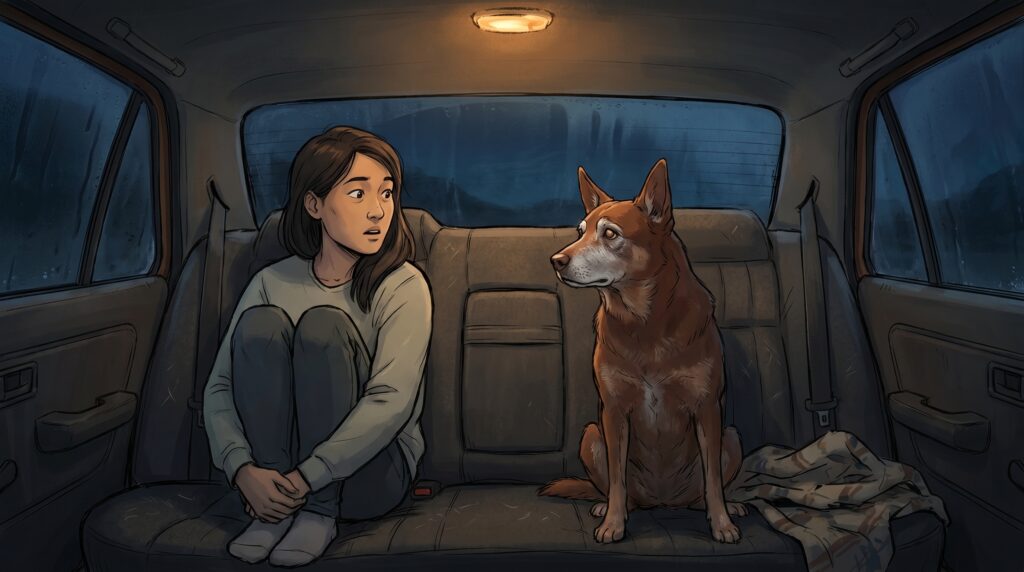
I meet the dog. He is old. His face is grey. He is a kelpie — an Australian working dog.
"That's Banjo," Lily says. "He's very old. He won't bother you."
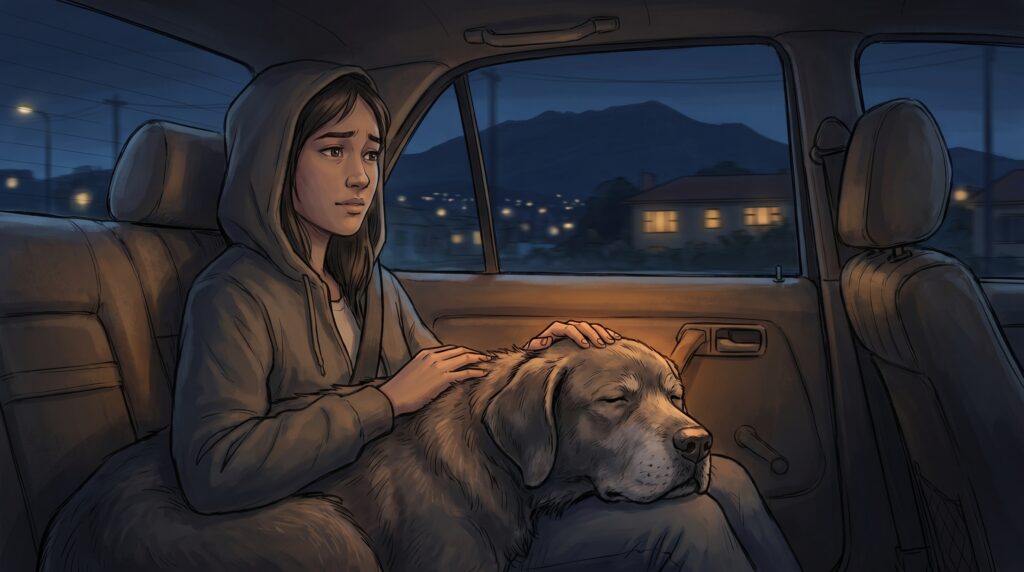
Banjo bothers me. In a nice way. The car moves. Banjo comes to me. He puts his head on my lap. He sighs. He sleeps.
I sit very still. Outside, Australia is dark. I see a black mountain above the city. Everything is a little frightening.
The dog is warm on my lap. For the first time, I am not afraid.
Version B — ふつうの英語
Then I got into the back seat of the car, and I met the dog.
He was old. His face was grey around the muzzle, and he moved slowly, like an old man. He was a kelpie — a kind of Australian working dog. He looked at me with calm brown eyes.
"That's Banjo," Lily said. "He's ancient. He won't bother you."
But Banjo did bother me — in the nicest way. The car started to move, and the old dog shuffled across the seat. He put his head down on my lap, gave one long sigh, and went to sleep.
Nobody said anything. It was just a normal thing, the thing the dog always did.
I sat very still. Outside the window, Australia was dark and strange. I could see the black shape of a mountain above the city. Everything was new and a little frightening.
But the dog's head was warm and heavy on my lap. And for the first time since I left Japan, I wasn't afraid.
Page 6 / 15
Version A — やさしい英語
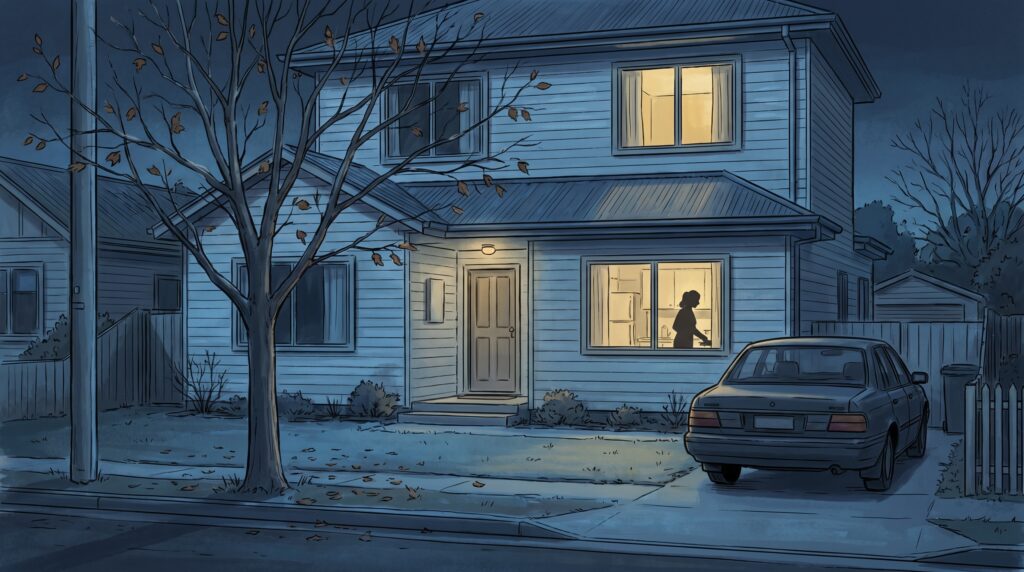
We arrive at the Bennetts' house. It is small and warm.
Version B — ふつうの英語
The Bennetts' house was small and warm. Megan made tea. Pete carried my suitcase upstairs.
Page 7 / 15
Version A — やさしい英語
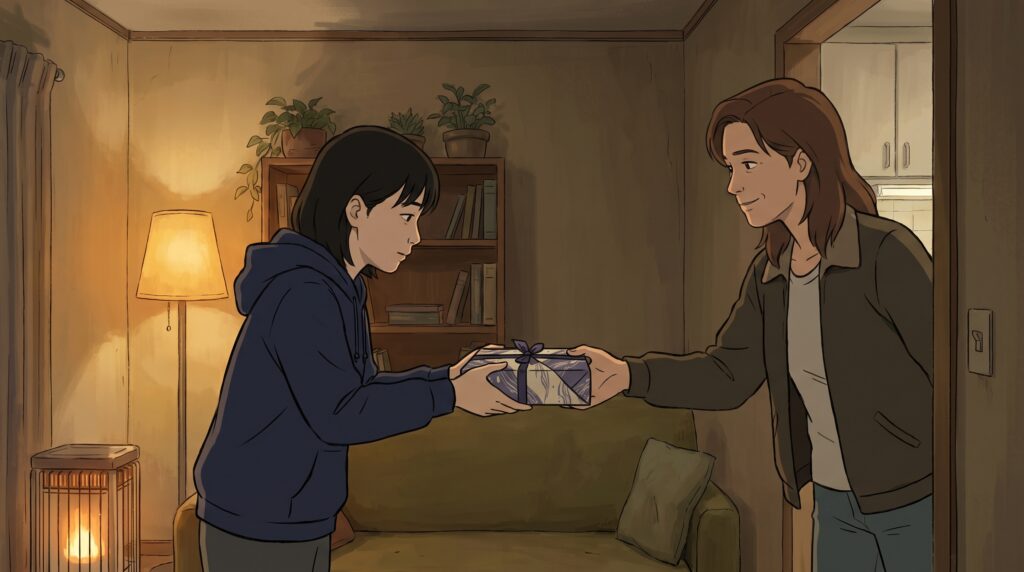
At home, I give Megan my gift. Green tea sweets from Japan. She says thank you.
Version B — ふつうの英語
I remembered my omiyage — the gift my mother had bought. In Japan, you always bring a gift. I took the box out of my bag. It was beautiful, wrapped in pretty paper, with green tea sweets inside.
"This is for you," I said. "It's from Japan."
"Oh, lovely," Megan said. "Thank you, Hina."
Page 8 / 15
Version A — やさしい英語
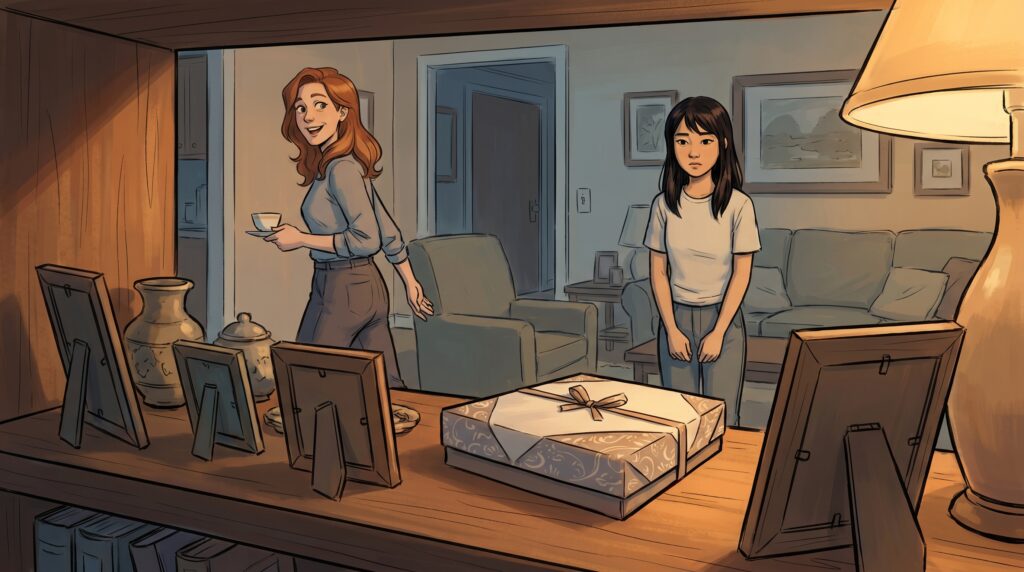
She puts the box on a shelf. Nobody opens it.
In Japan, a gift is important. A gift says: "Please be kind to me. Please be my family." But here, it is just a box on a shelf. I feel like an outsider again.
Version B — ふつうの英語
She took the box, smiled, and put it on a shelf. Then she went back to making the tea.
That was all. The gift sat on the shelf. Nobody opened it.
In Japan, a gift is important. It says: please be kind to me, please be my family for these nine days. But here, it was just a box on a shelf. I felt like an outsider again.
Page 9 / 15
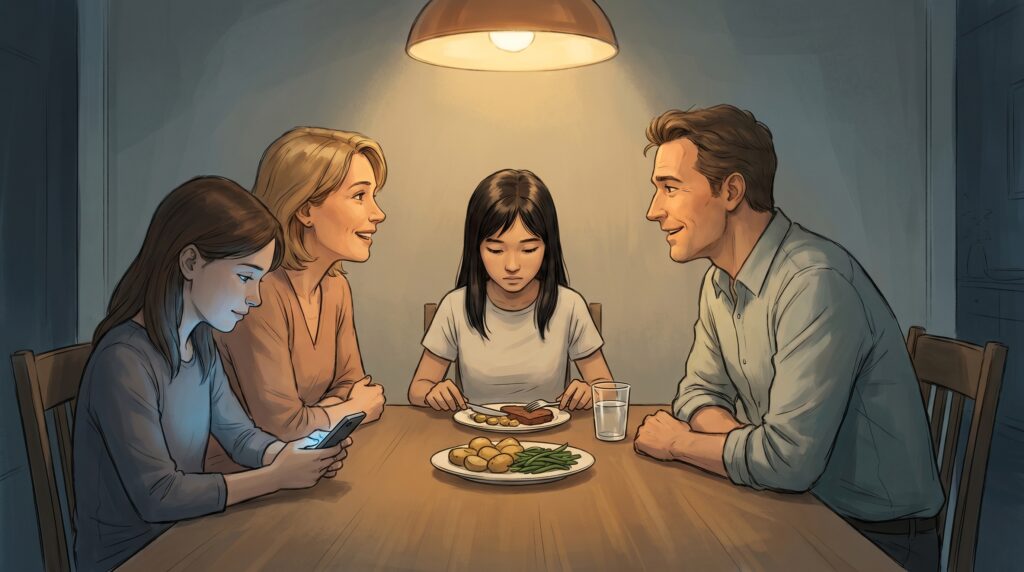
Version A — やさしい英語
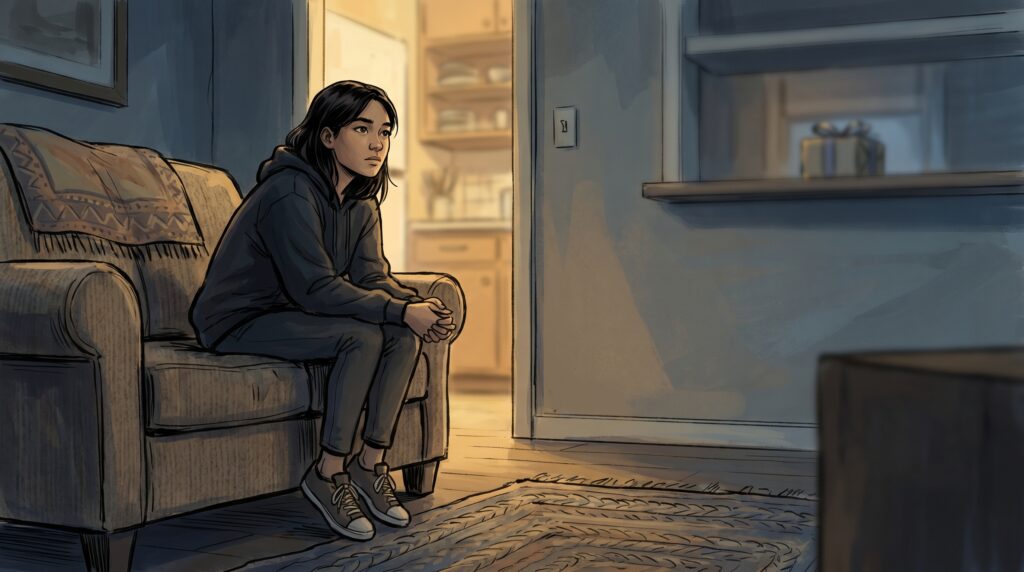
Dinner is quiet. I say "thank you so much" and "it is delicious." These are sentences from my notebook. I do not know any more words. I do not say any more.
I go to bed. I close my eyes.
Version B — ふつうの英語
Dinner was quiet and polite. I said "thank you so much" and "it's delicious" — sentences from my notebook. Lily looked at her phone. I didn't know what else to say, so I said nothing.
After dinner I went up to my room. I put on my pyjamas. I lay in the strange bed in the strange house and I thought: eight more days. I closed my eyes.
Page 10 / 15
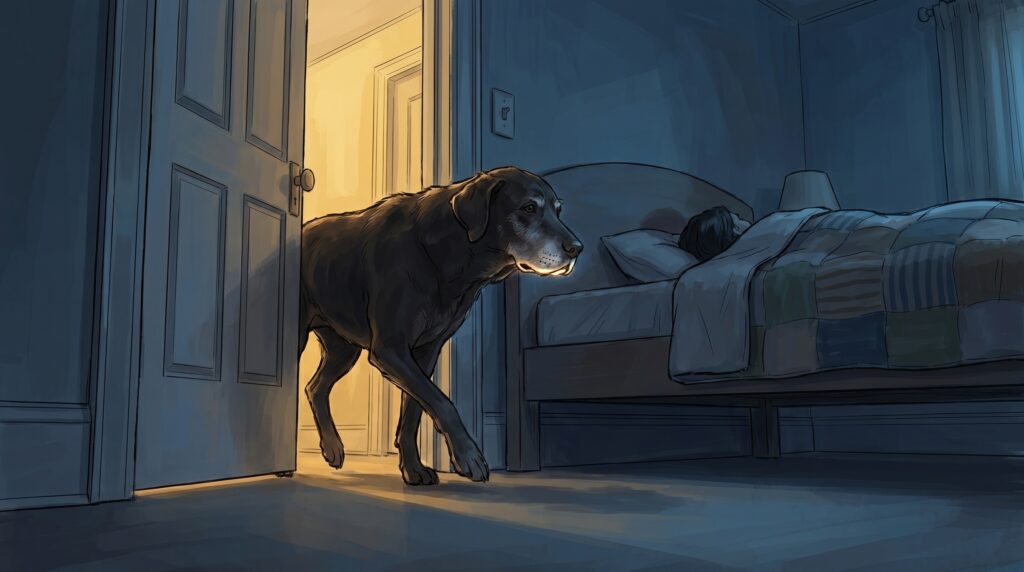
Version A — やさしい英語
The door creaks. Banjo walks in. He sits next to my bed.
Version B — ふつうの英語
Then the door creaked.
I opened my eyes. The room was dark. Something pushed the door open and walked in, slow and quiet.
It was Banjo.
Page 11 / 15
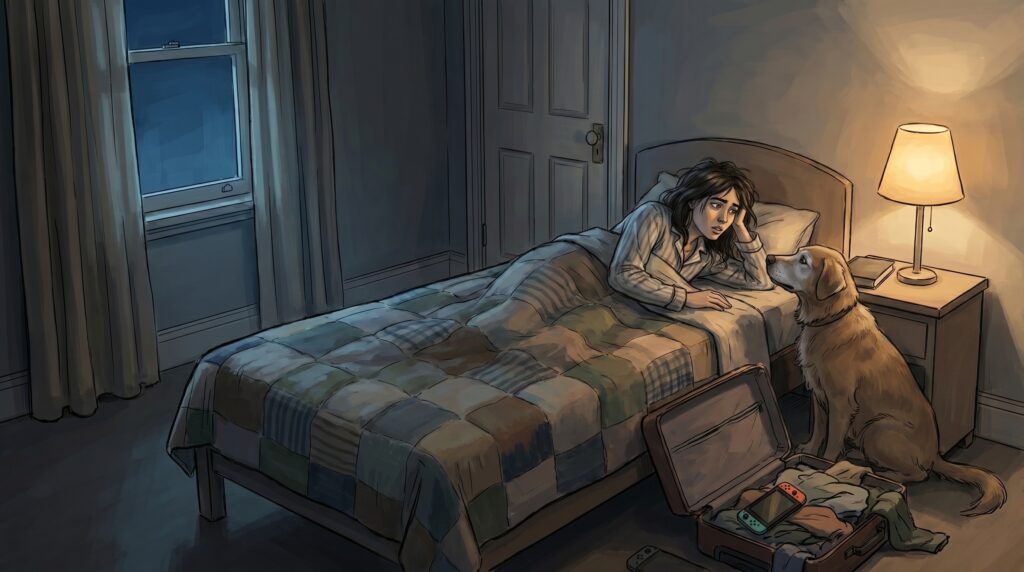
Version A — やさしい英語
Then the dog speaks.
"Big day, hey?" he says. "You were quiet in the car. You were very quiet."
Version B — ふつうの英語
The old dog crossed the room. He sat down next to my bed and looked at me. And then — I swear to you, this is what happened — the dog spoke.
"Big day, hey?" he said. "You were quiet as a mouse in that car."
Page 12 / 15
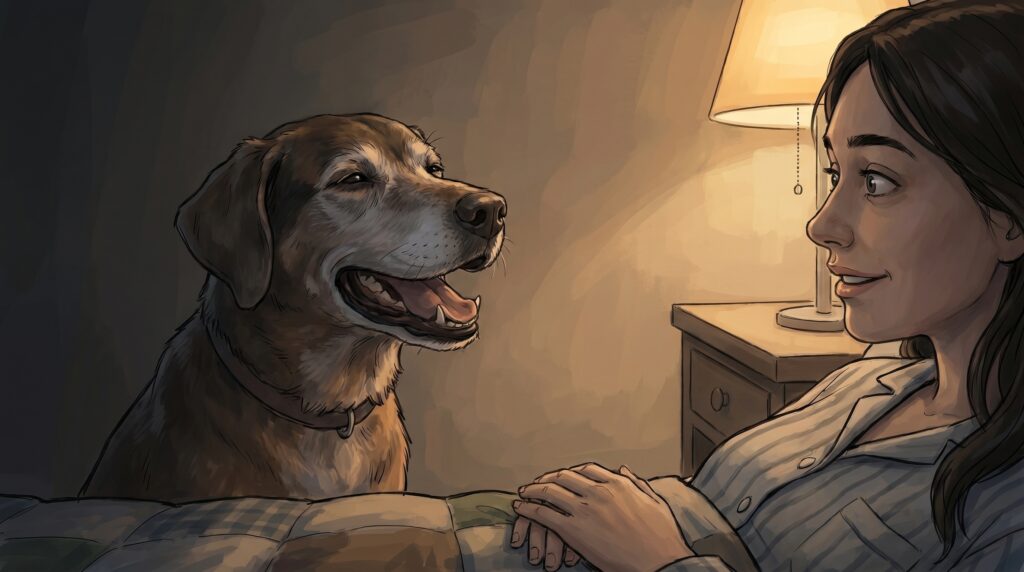
Version A — やさしい英語
"I'm not going to bite you. I'm an old dog. My teeth aren't strong. Don't look so worried. I'm too old for dramas."
Version B — ふつうの英語
I didn't move. I didn't breathe.
"Don't look so worried," Banjo said. "I'm not gonna bite you. I haven't got the teeth for it." He made a sound like a laugh. "I'm too old for dramas."
Page 13 / 15
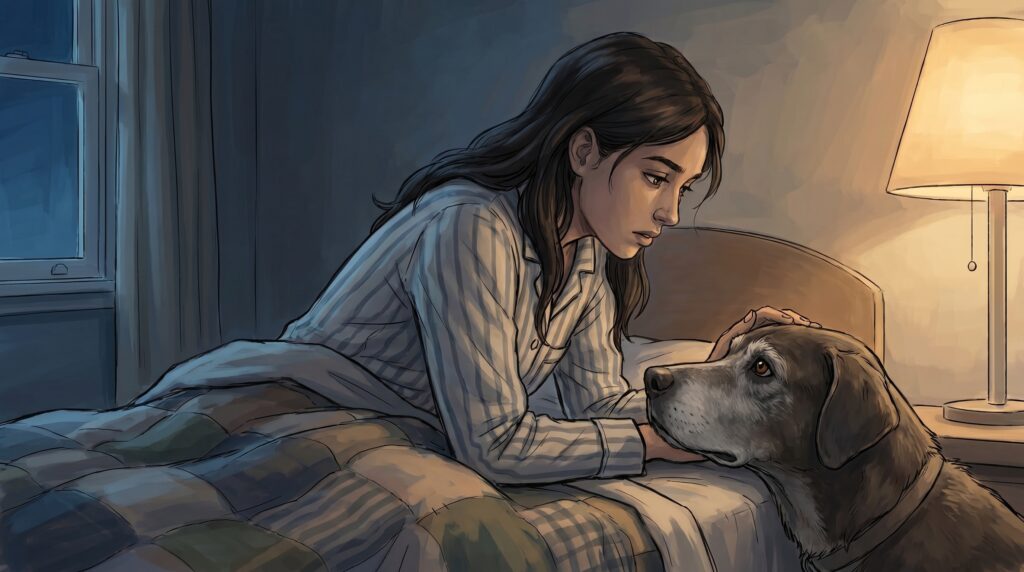
Version A — やさしい英語
"You can talk," I say quietly.
"I think so," says the dog. "So — at dinner tonight — what do you want to say? What's in your head?"
Version B — ふつうの英語
"You… you can talk," I whispered.
"Reckon I can," said the dog. "And here's a funny thing — you can understand me. Not everyone can." He rested his grey head on the bed. "So. Tell me. At dinner tonight — what did you want to say, but didn't?"
I stared at him.
Page 14 / 15
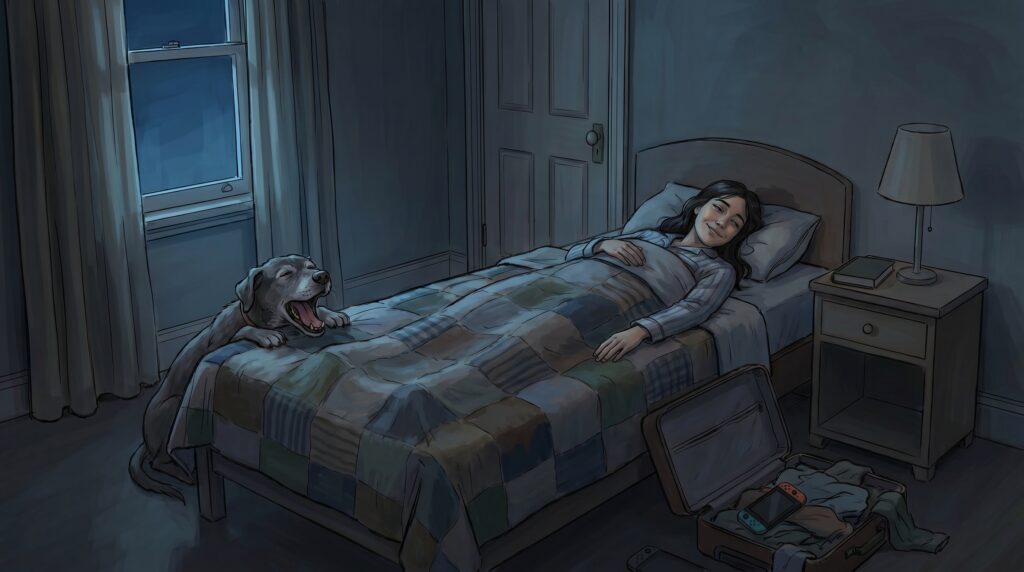
Version A — やさしい英語
"A lot of things," I say quietly.
"Yeah," says Banjo. "I think you do. We have eight days. We have time. No dramas. Sleep now, kid."
Version B — ふつうの英語
I thought about dinner. I thought about all the words that had stayed inside me, all evening, like fish in a net.
"A lot of things," I said quietly.
"Yeah," said Banjo. "I reckon you did." He yawned. "Well. We've got eight days to let those fish out. No dramas. Get some sleep, kid."
I wanted to ask him a hundred questions. But I was so tired, and the room was so warm, and the old dog's voice was so calm…
Page 15 / 15
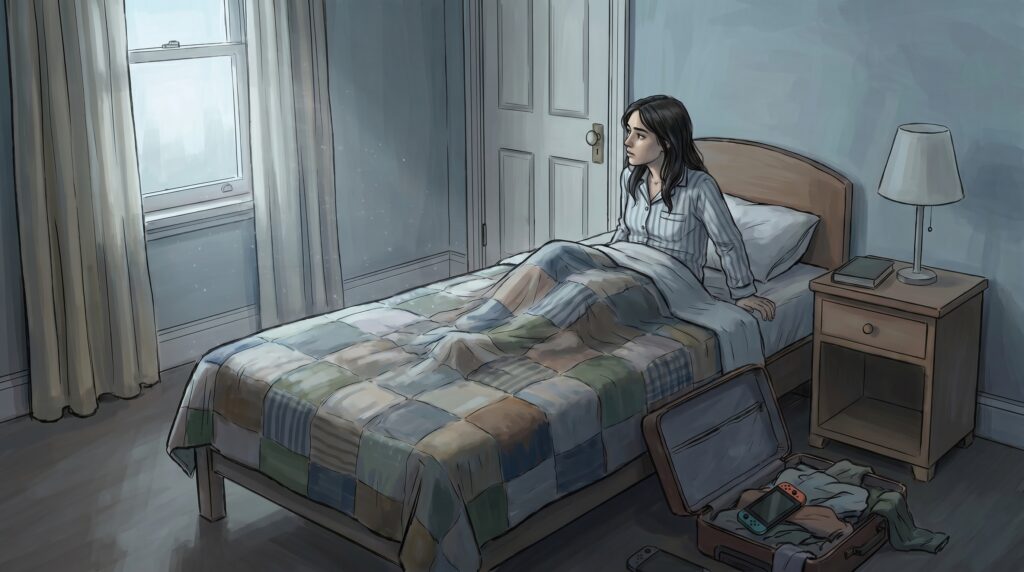
Version A — やさしい英語
In the morning, Banjo is downstairs. An ordinary old dog.
Maybe I dream it. It is not a dream. I think so. And I have eight more days here. I think I will hear from Banjo again.
Version B — ふつうの英語
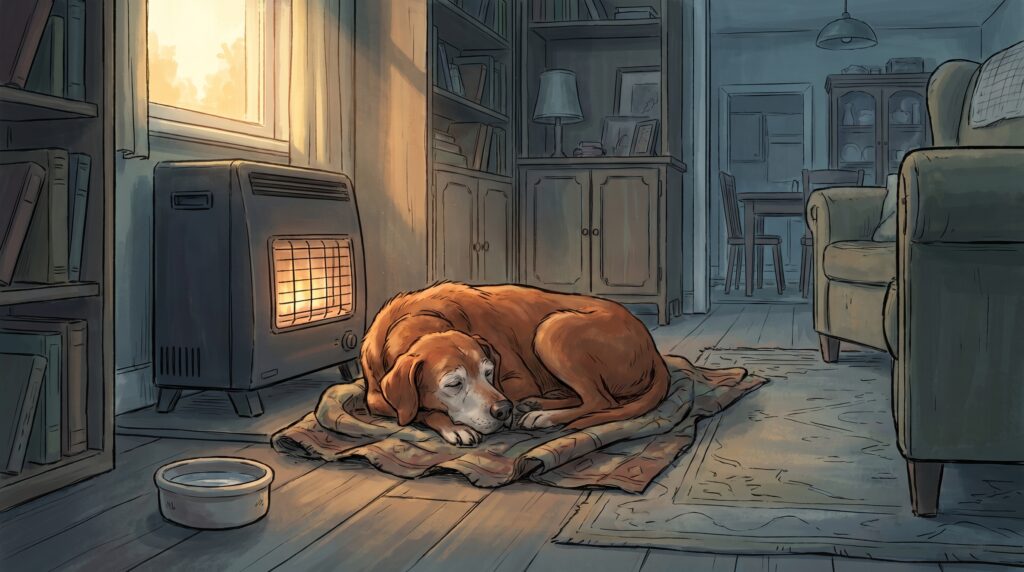
In the morning, I woke up alone. The door was closed. Banjo was downstairs, asleep by the heater — an ordinary old dog.
Maybe I dreamed it. A long flight, a strange bed; people have strange dreams.
But I didn't think it was a dream. And eight days is a long time. I was sure I would hear from Banjo again.