Why Studying English for Years Didn't Make You Fluent — and What 'Fluent Forever' Gets Right
If you spent six years studying “how to drive” from a textbook but never touched a steering wheel, you still couldn’t drive. That’s exactly what happened with English—years of preparation for a skill you never actually practiced.
Most learners were trained to decode English on paper: read a sentence, convert it to Japanese, think about the meaning. The reverse when speaking—Japanese first, then translate, carefully, in your head. This works for written tests. It even works for reading. What it can’t handle is the speed of real conversation.
Gabriel Wyner’s book Fluent Forever (脳が認める外国語勉強法 in Japanese) addresses this gap directly. It doesn’t promise miracles. It fixes the training problem at the root—how your brain was taught to process English in the first place.
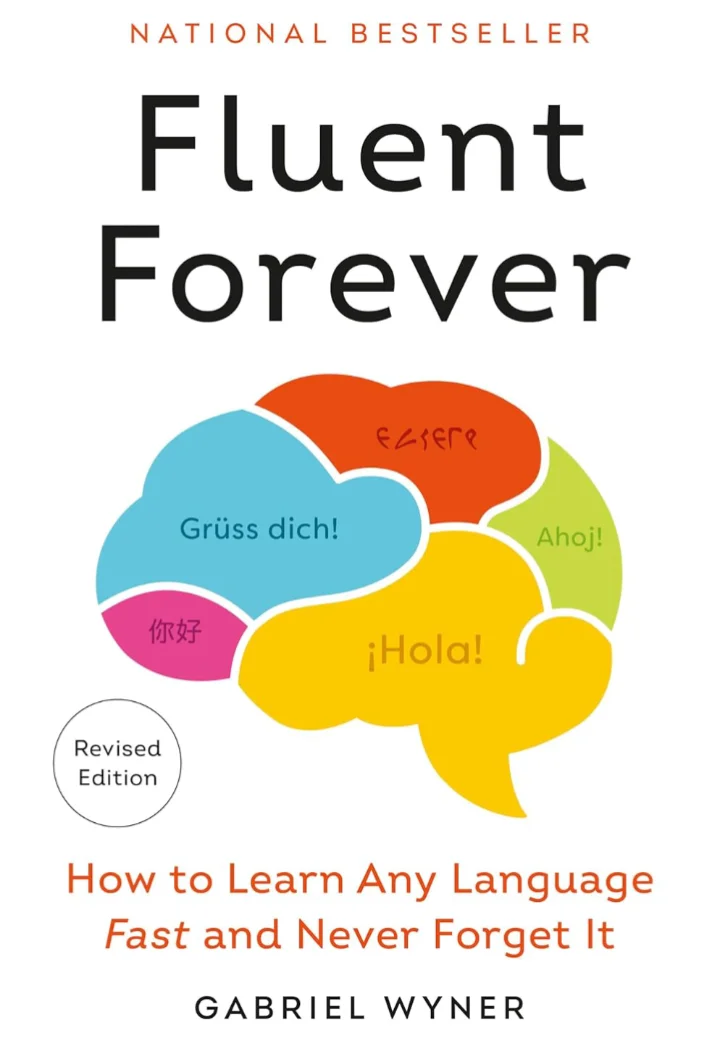

In this guide: Why years of study didn’t make you fluent, and what Gabriel Wyner’s ‘Fluent Forever’ method fixes at the root—pronunciation first, images over translations, and spaced repetition done right. Read time: ~7 minutes.
Table of Contents
The value of the Fluent Forever method is not that it promises miracles. Its value is that it starts in a different place and fixes the habits that block speaking. Instead of asking what students should memorize, it asks what the brain needs in order to recognize sounds, store meaning, and retrieve language under pressure.
The first priority is pronunciation—not as an accent goal, but as a listening skill. Training the ear to hear distinctions like “light” and “right” or “ship” and “sheep” changes how English enters the brain. When those sounds become clear, listening stops feeling like guesswork, and vocabulary has a place to land.
Another change is removing translation from the center of learning. Words are connected directly to images and meaning instead of Japanese equivalents. For many learners, this feels inefficient at first, and that feeling is understandable—translation is comfortable because it is familiar. But comfort is also what keeps the habit alive. Direct connections are faster once they form, and they are necessary for thinking in English while speaking.
The method also uses spaced repetition, which simply means reviewing information at the moment the brain is about to forget it. This is not about studying more; it is about studying at the right time, so words are available when you need them, not just recognizable on a page. Grammar, in this approach, comes from sentences rather than rules—you learn complete expressions you actually want to say, and the structure becomes familiar through use instead of explanation.
Why This Feels Hard at First
There is something important that often gets left out when people talk about learning methods. Good training can feel uncomfortable.
If you are used to reviewing what you already know, methods that force recall and listening can feel slower and more tiring. That discomfort is not a warning sign. It is what effortful learning feels like. Many adult learners, especially in Japan, were trained to avoid mistakes and wait until their answer feels correct. Spoken English does not develop under those conditions—it develops through use, before comfort arrives.
Where Lessons Come In
Books and apps can prepare the brain. They cannot replace real conversation. Conversation requires timing, listening under pressure, and adjusting to another person in the moment. It also requires a space where mistakes are expected and not punished.
In my Adult Conversation course lessons, I use these ideas in practice. We slow things down when needed, focus on pronunciation clearly but kindly, and practice pulling words out of memory instead of explaining them again. The goal is not perfect English. The goal is usable English—the kind that works when you actually need it.
These principles are built directly into my Domestic Immersion course, where English is used all day, with time to consolidate and reset instead of pushing nonstop.
A Simple Place to Start
If this approach is new to you, keep the first step small. Spend ten minutes listening carefully to English sound pairs. Make one image-based vocabulary card. Learn one sentence you would actually say, instead of one rule you already understand.
Set a timer and stop when it ends. Progress comes from repetition, not intensity.
The book goes deeper—into memory, forgetting, review mechanics, and why small changes make such a big difference. But those ideas only matter after the foundation is in place: pronunciation first, images instead of translations, and a system that reviews for you.
One Last Thing
If you feel frustrated because years of study did not lead to speaking, that frustration makes sense. You did not waste your time—you built a base under the wrong system.
With a different approach, that base can still be useful. English is not a talent you either have or do not have. It is a skill that responds to how it is trained.